Unlocking Success: A Comprehensive Example of B2B Marketing in Action

In the fast-paced world of business, understanding effective strategies can make or break a company’s growth. One crucial approach that has gained significant traction is B2B marketing. B2B marketing, or business-to-business marketing, refers to the process where one business markets its products or services to another business, rather than directly to consumers. To fully grasp the power of this strategy, let’s explore a detailed b2b marketing example that illustrates how businesses can successfully connect with their target audience, build relationships, and drive sales.
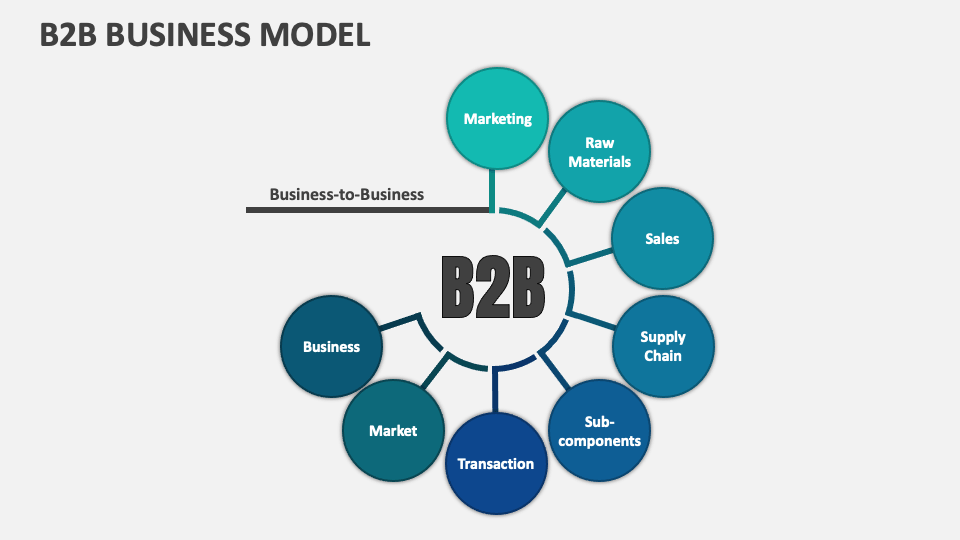
B2B Business Model PowerPoint and Google Slides Template - PPT Slides

Consider a company that produces advanced software solutions designed to improve supply chain management for large manufacturing firms. Their target market is other businesses in the manufacturing sector, making this a perfect case of B2B marketing. This company’s marketing team carefully crafts campaigns and content aimed specifically at the needs and pain points of manufacturing firms. The essence of B2B marketing in this example lies in tailoring the message to address industry-specific challenges, such as inventory tracking, logistics optimization, and cost reduction.

One core element of this B2B marketing example is content marketing. The software company develops whitepapers, case studies, and webinars that demonstrate how their product can solve complex supply chain problems. By offering valuable, educational content, they position themselves as thought leaders in the field. This is a classic B2B marketing approach—focusing on building trust and credibility over time rather than pushing for quick sales. Prospective clients engage with this content to understand how the solution can benefit their operations, moving them closer to making a purchase decision.

Another significant component of this B2B marketing example involves leveraging digital channels such as LinkedIn and industry-specific forums. These platforms allow the software company to directly engage with decision-makers, such as supply chain managers and procurement officers. Through targeted advertisements and personalized outreach, they maximize their visibility within the right circles. This targeted communication is a hallmark of effective B2B marketing, as it ensures that marketing efforts reach individuals who have the authority and interest to invest in the product.

The sales cycle in B2B marketing tends to be longer and more complex compared to consumer marketing. In our example, the software company understands this and incorporates lead nurturing strategies into their marketing efforts. They employ email campaigns to provide timely updates, share testimonials, and offer demos tailored to each prospect’s unique needs. This steady stream of communication keeps the brand top of mind and helps move potential buyers through various stages of the sales funnel.

A vital aspect of this B2B marketing example is the collaboration between marketing and sales teams. Marketing generates qualified leads by attracting prospects through their educational content and digital outreach. The sales team then follows up with personalized consultations to address specific client concerns and provide detailed demonstrations. This seamless handoff between marketing and sales ensures a cohesive customer experience, which is essential for closing deals in the B2B world.

Furthermore, analytics and data-driven decision-making play a critical role in refining the B2B marketing strategy in this example. The company continuously monitors key performance indicators such as website traffic, content engagement, lead conversion rates, and campaign ROI. By analyzing this data, they can identify which marketing tactics are most effective and allocate resources accordingly. This commitment to optimization exemplifies how successful B2B marketing is both an art and a science.

In addition to digital efforts, this B2B marketing example highlights the importance of attending industry trade shows and conferences. These events provide opportunities for face-to-face networking and hands-on demonstrations, which can be pivotal in building trust and securing contracts. The software company uses these events to showcase their product’s capabilities, engage with potential clients, and gather feedback to improve future marketing initiatives. Trade shows remain a powerful channel in B2B marketing for fostering relationships in a competitive landscape.

To further strengthen their B2B marketing strategy, the company also invests in customer success stories and referrals. Satisfied clients share their positive experiences through video testimonials and detailed case studies, which are then used in marketing campaigns to influence new prospects. This peer validation is highly persuasive in B2B marketing because purchasing decisions often involve multiple stakeholders who rely on trusted recommendations before committing to a solution.

Overall, this B2B marketing example demonstrates that success depends on a clear understanding of the target market, a commitment to providing value through education and relationship-building, and the use of multiple channels to engage prospects effectively. From content marketing and digital outreach to trade shows and customer advocacy, each element works together to create a comprehensive strategy that drives business growth.

In conclusion, B2B marketing is a sophisticated discipline that requires patience, insight, and a strategic approach. The software company’s example shows how a well-executed B2B marketing plan can transform complex products into compelling solutions for other businesses. By focusing on delivering value, nurturing leads, and building trust, companies can create lasting partnerships that fuel success in competitive industries. This example highlights the power of B2B marketing to connect businesses and foster growth through thoughtful, targeted engagement.


Experience Excellence: More About Our Chauffeur Services

When it comes to traveling in style, comfort, and reliability, our chauffeur services stand out as the premier choice. Whether for business meetings, special events, or airport transfers, chauffeur services provide a seamless, stress-free More about our chauffeur services experience that transforms ordinary transportation into a luxury affair. Our commitment to excellence ensures that every journey with our chauffeur services exceeds expectations.

Logan Airport car service - Boston

Chauffeur services are more than just driving from point A to point B. They represent a level of professionalism and attention to detail that caters to clients who demand the highest standards. Our chauffeur services guarantee punctuality, discretion, and safety, making them the perfect option for those who value time and comfort. Each driver in our chauffeur services team is trained to deliver a courteous and personalized experience.

The advantage of choosing chauffeur services lies in the personalized approach to travel. Unlike regular taxis or rideshares, chauffeur services focus on the client’s needs and preferences. From vehicle selection to route planning, every aspect is tailored to ensure maximum satisfaction. Our chauffeur services include luxury sedans, SUVs, and limousines, providing options for any occasion or group size.

A key benefit of our chauffeur services is the emphasis on reliability. When you book chauffeur services, you can rest assured that your driver will arrive promptly and prepared. This reliability is especially important for corporate clients who depend on timely arrivals for meetings and events. Our chauffeur services uphold strict standards to guarantee that time is always respected.

Safety is another cornerstone of our chauffeur services. All drivers undergo thorough background checks and rigorous training in defensive driving techniques. Our fleet of vehicles is regularly inspected and maintained to meet the highest safety standards. With chauffeur services, clients enjoy peace of mind knowing their journey is in safe hands.

Flexibility is also a defining feature of our chauffeur services. Whether you require transportation for a few hours or an extended period, our chauffeur services adapt to your schedule. This flexibility allows clients to plan trips with ease, knowing their transportation needs will be met without hassle. Our chauffeur services team is available around the clock to accommodate last-minute requests or changes.

One of the unique aspects of our chauffeur services is the emphasis on discretion and privacy. Many clients, including celebrities and business executives, choose chauffeur services to maintain confidentiality during travel. Our chauffeurs are trained to be unobtrusive and professional, ensuring that your privacy is respected throughout your journey.

In addition to traditional transportation, our chauffeur services offer concierge-style assistance. Need help with luggage, restaurant reservations, or event tickets? Our chauffeurs can provide recommendations and support, adding an extra layer of convenience. This commitment to service excellence sets our chauffeur services apart from standard transportation options.

Environmental responsibility is increasingly important in the transportation industry, and our chauffeur services are committed to sustainability. We offer eco-friendly vehicle options and prioritize efficient routing to reduce our carbon footprint. Choosing our chauffeur services means opting for a service that values both luxury and environmental care.

Booking our chauffeur services is simple and convenient. With an easy-to-use online platform and responsive customer support, arranging your next trip is hassle-free. Our chauffeur services team handles every detail, from confirmation to final drop-off, ensuring a smooth and enjoyable experience from start to finish.

To summarize, our chauffeur services provide a superior transportation experience characterized by professionalism, reliability, safety, and luxury. Whether you need a ride to an important business event or a special celebration, our chauffeur services ensure you arrive relaxed and on time. Discover the difference that expert chauffeur services can make on your next journey.

By choosing our chauffeur services, you are investing in more than just a ride—you are securing a travel experience marked by quality and care. Let our chauffeur services elevate your travel standards and make every trip memorable.

Understanding the ELISA Standard Curve: A Key to Accurate Quantification

Enzyme-Linked Immunosorbent Assay (ELISA) is a widely used technique in laboratories for detecting and quantifying substances such as proteins, hormones, and antibodies. Central to the success of ELISA is the ELISA standard curve, which serves as the foundation for interpreting the assay results accurately. In this article, we will explore the importance of the elisa standard curve, how it is generated, and its role in ensuring precise measurement of analytes.

The ELISA standard curve is a graphical representation that correlates known concentrations of a target analyte to the corresponding signal produced during the assay, typically measured as optical density (OD). This curve allows researchers to determine the unknown concentrations of the analyte in test samples by comparing their OD values to those on the standard curve. Without this curve, the raw data collected from ELISA would be meaningless, as the signal alone does not provide quantitative information.

Creating a reliable ELISA standard curve involves preparing a series of standards with known concentrations of the analyte, which are then processed through the ELISA procedure alongside the unknown samples. The OD readings for each standard concentration are plotted on the y-axis against the known concentrations on the x-axis, resulting in a curve that usually follows a sigmoidal or linear pattern depending on the assay design. The accuracy of the ELISA standard curve directly impacts the assay’s sensitivity and reliability.

Several factors influence the quality of the ELISA standard curve. First, the choice of standards must be appropriate and cover the expected concentration range of the unknown samples. This ensures that the curve accurately represents the dynamic range of the assay. Second, careful pipetting and consistent sample handling are critical to minimize variation and generate reproducible OD values. Lastly, the selection of the curve-fitting method—whether linear regression, four-parameter logistic (4PL), or five-parameter logistic (5PL)—affects how well the curve models the data, especially in assays with a broad concentration range.

Interpreting the ELISA standard curve requires understanding its shape and the mathematical model applied. For many ELISA tests, the 4PL or 5PL curve fitting is preferred because these models accommodate the sigmoidal shape of the response, providing a better fit at both low and high concentration ends. This fitting enables more accurate extrapolation of unknown sample concentrations, which is vital when samples fall near the detection limits of the assay.

The importance of the ELISA standard curve extends beyond simple quantification. It also acts as a quality control tool, allowing scientists to assess the consistency and performance of the assay across different runs. By comparing standard curves generated on different days, researchers can detect issues such as reagent degradation or procedural inconsistencies, ensuring that the assay results remain trustworthy over time.

Despite its fundamental role, constructing a perfect ELISA standard curve can be challenging. One common issue is the presence of background noise or non-specific binding, which can distort the lower end of the curve and affect sensitivity. Researchers often address this by including appropriate controls and optimizing assay conditions to reduce variability. Additionally, the use of freshly prepared standards and proper storage conditions helps maintain the integrity of the standard solutions, contributing to more consistent standard curves.

Another critical aspect is the interpretation of results derived from the ELISA standard curve. Once the unknown sample OD values are measured, they must be carefully matched to the curve to estimate the analyte concentration. This step often involves software tools that apply the selected curve-fitting algorithm to interpolate values. Users should verify that the sample readings fall within the reliable range of the standard curve, as extrapolating beyond this range can lead to inaccurate results.

The ELISA standard curve is indispensable in a variety of fields including clinical diagnostics, food safety testing, and environmental monitoring. For instance, in clinical settings, it enables precise measurement of biomarkers that assist in disease diagnosis and monitoring. Similarly, in food safety, the curve facilitates the detection of contaminants or allergens at trace levels, ensuring consumer protection.

In conclusion, the ELISA standard curve is a critical component of the ELISA assay, underpinning the method’s ability to deliver accurate and quantitative results. By carefully preparing standards, selecting appropriate curve-fitting methods, and maintaining assay consistency, researchers can rely on the ELISA standard curve to translate raw data into meaningful scientific information. Understanding and optimizing this curve ultimately enhances the reliability of ELISA, making it a powerful tool in both research and applied sciences.

Dog Grooming in Orlando, FL: A Complete Guide to Keep Your Pet Looking and Feeling Great


Dog grooming in Orlando, FL, is an essential service for keeping your furry friend healthy, comfortable, and looking their best. Whether you’re a dog owner in need of a one-time grooming session or a regular visitor to a grooming salon, understanding the importance of grooming and finding the right service can make all the difference. Orlando is home to a variety of professional Dog Grooming Orlando FL online, offering everything from basic baths to full spa treatments for dogs of all breeds and sizes. In this article, we’ll explore the benefits of dog grooming, the services available in Orlando, and tips for selecting the best groomer for your dog.

Regular dog grooming in Orlando, FL, is more than just about making your pet look good—it plays a crucial role in their overall health. Dogs need regular grooming to maintain a clean and healthy coat, prevent matting, and avoid potential skin issues. In Florida’s warm climate, grooming is especially important to prevent your dog from overheating, as a well-maintained coat can help with temperature regulation. Additionally, grooming helps with early detection of skin problems, parasites, or injuries that might otherwise go unnoticed. Whether you have a long-haired breed like a Poodle or a short-haired breed like a Beagle, grooming should be a regular part of your pet’s care routine.

In Orlando, FL, you’ll find a wide variety of dog grooming salons that offer both traditional and luxury grooming services. Common services include basic baths, haircuts, nail trimming, ear cleaning, and teeth brushing. Many grooming centers also offer add-on services like de-shedding treatments, flea baths, and paw pad moisturizing. For dogs with special needs, some groomers in Orlando offer spa-like treatments with essential oils or soothing massages. Finding a grooming salon that offers personalized services tailored to your pet’s specific needs can make a big difference in both your dog’s comfort and appearance.

When it comes to choosing the right dog grooming service in Orlando, there are several factors to consider. First, look for a groomer with experience and a good reputation. Many grooming salons in Orlando, FL, are staffed with trained professionals who understand the specific needs of different dog breeds and temperaments. Reading online reviews or asking for recommendations from fellow pet owners can help you find a reputable groomer. It’s also important to ensure that the grooming salon adheres to high standards of cleanliness and safety. Ask about their grooming techniques, the products they use, and their experience handling dogs with anxiety or behavioral issues.

Some dog owners in Orlando may prefer to go with mobile dog grooming services, which offer the convenience of having a groomer come directly to their home. Mobile grooming services are especially helpful for dogs who are anxious in traditional grooming settings or for pet owners with busy schedules. These services typically offer the same range of grooming options as in-salon appointments, including haircuts, baths, nail trimming, and more. Mobile grooming is a great way to provide a stress-free grooming experience for your dog while also saving time.

When preparing your dog for grooming in Orlando, FL, it’s important to keep a few things in mind. Before the appointment, ensure that your dog is well-exercised so they are calm and relaxed during the grooming session. If your dog has never been groomed before, consider scheduling a brief introductory visit to get them used to the process. Make sure to discuss any special needs or preferences you have for your dog with the groomer beforehand. For example, if your dog has sensitive skin or allergies, you may want to inquire about hypoallergenic grooming products or treatments that will be used. Communication with your groomer ensures that the experience will be a positive one for both you and your dog.

In conclusion, dog grooming in Orlando, FL, is an essential aspect of responsible pet ownership. It keeps your dog healthy, comfortable, and looking their best, and provides a fantastic opportunity to bond with your pet. Whether you opt for a traditional grooming salon or a mobile service, the right groomer will provide expert care and attention tailored to your dog’s unique needs. By finding a reliable and skilled dog groomer in Orlando, you ensure that your dog stays happy and healthy, making grooming sessions something both you and your furry friend can look forward to.

Windshield Repair for Cracked Windshields Near Oakville

As a homeowner who recently completed extensive car maintenance projects over the past decade, I’ve learned that ignoring a cracked windshield is a risk you don’t want to take lightly. I still remember last spring, when a small chip appeared on windshield repair after a loose rock hit it on the highway near Oakville. At first, I thought it was minor and would hold up until my next scheduled service, but over a few weeks, the chip grew into a noticeable crack that spidered across the glass. That experience taught me quickly how fragile a compromised windshield can be and how timely repair is not just a convenience—it’s a safety necessity.

Windshield Repair Service | Germain Body Shop of BeavercreekIn my experience, the common mistake many people make is procrastinating, assuming the crack will remain stable. I spoke with a neighbor whose truck developed a similar windshield crack after a winter storm. They waited several months before seeking repair, and by then, the crack had worsened to a point where replacement was the only option. Observing that situation firsthand made me appreciate the value of immediate attention. I opted for a local windshield repair service in Oakville known for mobile repairs, which allowed them to come directly to my driveway. Within an hour, the technician had stabilized the crack and injected resin to restore the structural integrity of the glass. The difference was remarkable—the chip was barely visible, and I no longer worried about it expanding during a sudden stop or another debris strike.

Another situation reinforced the importance of choosing the right repair provider. I had a friend who tried a low-cost repair kit purchased online, thinking it would be a simple weekend fix. Unfortunately, the resin didn’t set correctly, leaving air pockets and reducing visibility. It was frustrating because the DIY attempt delayed the proper repair and ultimately led to a more expensive replacement. That experience taught me to trust certified technicians who use professional-grade tools and resins, especially for vehicles driven regularly on highways where safety is paramount.

I’ve also found that seasonal changes around Oakville can exacerbate windshield damage. For instance, temperature fluctuations during early spring can cause tiny chips to expand quickly. I noticed this firsthand when a minor crack on my passenger-side windshield had spread slightly after a week of cold nights and warm days. Scheduling repair promptly prevented the need for a full windshield replacement and saved several hundred dollars. It also reinforced my habit of routinely inspecting the windshield for chips after long drives or adverse weather.

In choosing a repair service, I pay attention not only to speed and cost but also to the quality of materials used. A properly repaired windshield restores strength and clarity, whereas subpar repairs can leave micro-fractures that compromise safety. I’ve worked with a technician near Oakville who explained how modern resin technology bonds with glass to restore structural integrity almost to factory standards. I appreciated the hands-on demonstration and realized how nuanced professional repair is compared to a casual DIY approach.

After dealing with multiple minor cracks and witnessing a neighbor’s unfortunate delay, I strongly recommend addressing any windshield damage as soon as it appears. Immediate repair protects the glass from spreading, maintains visibility, and ensures that the vehicle meets safety standards. My personal experiences have taught me that the cost of timely repair is far outweighed by the safety benefits and the avoidance of a complete replacement. A cracked windshield is not just an aesthetic issue—it’s a structural one, and acting quickly near Oakville made all the difference in keeping my vehicle safe and functional.

Why Fire Watch Guards Became My Go-To Safety Solution

As a construction site supervisor with over a decade of experience, I’ve learned firsthand how critical Fire Watch Guards are to keeping projects safe. Early in my career, I was managing a renovation where multiple contractors were performing welding near flammable materials. A trained fire watch guard noticed sparks landing on a pile of scrap wood and immediately took action, preventing what could have been a costly fire. That moment cemented for me that fire watch personnel aren’t just compliance checkboxes—they’re essential protectors of people and property.

I recall another project in a commercial high-rise where hot work was happening across several floors simultaneously. The site management tried to assign an untrained worker as a fire observer, thinking supervision would suffice. Within an hour, a small flame ignited near an unmonitored corner. Thankfully, the real fire watch guard on duty noticed it from a distance and intervened. From that incident, I realized that experience, vigilance, and proper training make all the difference between a minor incident and a disaster.

On a smaller industrial site, I once worked with a fire watch guard who went beyond standard duties. They regularly inspected fire extinguishers, monitored temporary storage areas, and briefed new crew members on safety protocols. During one inspection, they spotted a welding spark near a chemical storage barrel, allowing us to move the material and avoid a potential catastrophe. I’ve found that guards who are proactive rather than reactive drastically reduce hazards across the entire project.

One situation that stands out occurred during an evening shift on a renovation site. The crew was tired, and safety fatigue had set in. Our fire watch guard remained alert, noticing a smoldering piece of insulation that had fallen unnoticed. Their quick response not only prevented damage but also reminded the crew that safety isn’t just about rules—it’s about active awareness. Experiences like this have shaped my philosophy: investing in trained personnel pays for itself many times over in prevented losses and protected lives.

In my experience, fire watch guards also enhance safety culture. Teams become more conscientious when they know someone is actively monitoring risks. I’ve seen crews maintain better housekeeping, handle materials more carefully, and report unsafe conditions promptly, all because of the consistent presence of trained guards.

From handling welding operations to overseeing flammable materials, I’ve come to rely on fire watch guards for both their vigilance and their ability to instill a culture of safety. Every project, regardless of scale, benefits from having qualified personnel on duty, actively monitoring for fire hazards. The peace of mind they provide is invaluable, and after witnessing incidents prevented firsthand, I wouldn’t approach a hot work project without them.

Navigating Oceanside Real Estate: Insights from a Local Agent’s Experience

I’ve been a licensed real estate agent in Oceanside for over a decade, and in that time, I’ve seen the market swing in ways that can surprise even seasoned homeowners. When I first started, I worked with a couple looking for a beachside real estate agents in Oceanside budget. They had been struggling with online listings that promised “dream homes” but were either overpriced or had hidden issues. Walking them through actual neighborhoods and helping them prioritize location versus amenities turned out to be far more effective than any search algorithm.

3 Best Real Estate Agents in Oceanside, CA - Expert Recommendations

One thing I’ve consistently noticed is how often clients underestimate the nuances of local property trends. For instance, last summer I helped a family relocate from inland California. They initially focused only on square footage, but after touring several properties near Mission San Luis Rey, they realized that proximity to schools and public transit was more valuable for their lifestyle than an extra bedroom. By guiding them through these real-world considerations, they ended up with a home that felt like it belonged to them from day one.

In my experience, choosing the right agent can make or break the buying process. I remember a customer last spring who had been burned by an agent who promised to handle negotiations personally but left them to fend for themselves when a bidding war erupted. From that point on, I made it a point to ensure my clients understand each step—whether it’s inspecting a property, evaluating comparable sales, or assessing the hidden costs of homeownership. This hands-on approach often saves people thousands of dollars and weeks of stress.

I’ve also encountered sellers who underestimated the importance of staging and presentation. One homeowner wanted to sell quickly and skipped decluttering and minor repairs. When I suggested simple adjustments—fresh paint, landscaping tweaks, and better lighting—they were skeptical. The home sold within two weeks at a price higher than initially anticipated. Experiences like this reinforce why local insight and practical guidance are irreplaceable in real estate.

Beyond the transactions themselves, my role often extends into being a neighborhood guide. Oceanside has pockets that appeal differently depending on lifestyle—some areas are perfect for retirees seeking quiet streets, others attract young professionals wanting walkable access to restaurants and surf spots. Helping clients weigh these factors, sometimes over multiple visits, makes the process feel more like discovering a community rather than just a property.

In reflecting on my years in Oceanside real estate, I’ve realized that successful transactions are rarely about speed or flashy listings. They’re about understanding what truly matters to the person on the other side of the deal. A property becomes a home when practical needs, personal values, and local knowledge intersect. As someone who’s walked countless clients through this journey, I’ve found that patience, transparency, and a willingness to share hands-on experience make the difference more than any online tool or marketing pitch ever could.

How Fire Watch Guards Became Essential on My Industrial Job Sites

I’ve worked for more than ten years as a plant operations manager in heavy manufacturing, overseeing facilities that run hot, loud, and around the clock. In environments like that, even small changes carry risk. That’s why I stopped treating Fire Watch Guards as a temporary inconvenience and started viewing them as a necessary layer of protection whenever normal safeguards are disrupted.

Fire watch Security Guards: Ensuring Safety

One of the earliest wake-up calls came during a scheduled shutdown of a suppression system in one of our older buildings. The plan was simple: isolate the system overnight, finish the work, and restore it before morning shift. What wasn’t simple was the reality on the floor. Machines were still cooling down, maintenance crews were welding in confined spaces, and temporary ventilation was running harder than usual. The fire watch guard on duty noticed heat lingering longer than expected near a duct run that had collected years of dust. Work paused, the area was cleaned, and the schedule slipped slightly. That delay cost us a few hours. A fire would have cost us weeks.

In industrial settings, fire risks rarely come from obvious flames. They come from friction, residue, and assumptions. I once watched a contractor insist a grinding operation was safe because it was “routine.” The fire watch guard disagreed and pointed out sparks traveling farther than expected due to airflow from nearby fans. Barriers were adjusted, and the task finished without incident. That kind of judgment doesn’t come from a rulebook; it comes from seeing how things actually behave under real conditions.

A common mistake I’ve encountered is assuming supervisors can handle fire watch responsibilities alongside their normal duties. I’ve tried it. It doesn’t work. Supervisors are focused on production targets, staffing issues, and keeping equipment running. Fire watch requires uninterrupted attention. Dedicated guards notice the subtle stuff—an unusual vibration, a smell that doesn’t belong, a door that’s always closed suddenly being propped open.

Another issue I see is underestimating how quickly conditions shift after a shift change. A space that’s safe at 5 p.m. can look very different by midnight once cleaning crews, maintenance teams, and delivery drivers cycle through. Experienced fire watch guards adjust their patrols as activity patterns change. They don’t rely on habit; they rely on observation.

From my side of operations, the most effective fire watch coverage happens when guards are treated as part of the team. We brief them on hot work schedules, equipment cooldown times, and known trouble spots. In return, they flag things we overlook because we’re too close to the process to notice gradual changes.

After years of managing facilities where a single incident can halt production, my view is practical. Fire watch guards protect the narrow windows when systems are offline and margins are thin. Their work doesn’t show up in output reports or maintenance logs, but it shows up in uninterrupted operations and quiet nights. In an industrial setting, that kind of reliability is worth far more than people realize.

Why Recovery in Langley Often Starts by Changing How You Move, Not How Much You Do

I’ve been working as a registered physiotherapist in the Fraser Valley for many years, and most people who begin looking into physiotherapy in Langley aren’t dealing with a fresh injury. In my experience, they’re dealing with something that lingered just long enough to become part of daily life. Pain that eased but never fully left. Stiffness that only showed up after long drives or busy workdays. Movements that slowly became cautious without anyone noticing when the shift happened.

I remember a patient who came in after months of shoulder discomfort they described as “annoying, not serious.” What stood out wasn’t the pain itself, but how they avoided lifting their arm away from their body, even for light tasks. That protective habit made sense early on, but months later it was reinforcing the problem. Once we addressed how they moved—not just what hurt—the shoulder finally started settling down.

What hands-on physiotherapy actually pays attention to

A lot of people expect physiotherapy to begin with exercises. In reality, the most valuable information often comes from watching. How someone walks into the clinic, how they sit down, how their breathing changes under light effort—all of that tells me far more than a checklist of symptoms.

I once worked with someone dealing with recurring calf tightness who assumed it was a flexibility issue. The calf wasn’t the root cause. The problem showed up only after several minutes of walking, when fatigue changed how their ankle loaded. Once we corrected that movement pattern, the tightness eased without aggressive stretching. Treating what feels tight doesn’t always solve what’s actually driving it.

Common mistakes I see before people seek care

One of the most frequent mistakes is waiting because pain feels manageable. Many people ignore stiffness, weakness, or hesitation because it doesn’t stop them outright. By the time pain becomes impossible to ignore, the body has often been compensating for months, and those habits are harder to undo.

Another issue is doing too much too soon. I’ve had patients tell me they doubled their exercises because they felt motivated and wanted faster results. That enthusiasm often backfires. Progress usually comes from applying the right amount of stress consistently, not from pushing through discomfort.

Why experience shifts the focus away from pain alone

Early in my career, I paid close attention to pain levels. Over time, I learned to watch behaviour instead. Do people pause before bending? Do they brace before turning? Those small hesitations matter, even on days when pain feels low.

I worked with a client recovering from an ankle injury who insisted they were almost back to normal. What gave it away was how they always stepped down with the same foot first. Once we addressed that guarded movement, balance and confidence improved quickly. Pain reduction alone wouldn’t have fixed it.

Being realistic about what physiotherapy can and can’t do

I’m upfront when physiotherapy isn’t the full answer. Sometimes rest is still needed. Sometimes medical follow-up or imaging comes first. I’ve advised people to pause treatment when their body clearly needed recovery rather than more input.

But when lingering pain, stiffness, or repeated flare-ups are shaping daily decisions, guided physiotherapy can help restore trust in movement. The goal isn’t perfection or never feeling discomfort again. It’s being able to move through the day without constantly negotiating with your body.

After years of working with people in Langley, I’ve learned that real recovery rarely arrives in a dramatic moment. It shows up quietly—one easier morning, one smoother walk, one day where you realize you didn’t think about your body at all. That’s usually when people know they’re finally moving forward again.

What Actually Moves the Needle in Marketing for Cleaning Companies

I’ve spent the last decade working almost exclusively with residential and commercial cleaning companies—solo operators, family businesses, and multi-crew outfits juggling growth pains. Early on, after watching one too many great cleaners struggle to stay booked, I started pointing owners toward clearer, more practical marketing systems like the ones outlined at MarketingForCleaningCompanies.com, because most of the problems I was seeing weren’t about effort. They were about focus.

Marketing for Cleaning Companies | WorkWise Business Solutions

One of my first long-term clients was a small residential cleaner who did excellent work but relied almost entirely on word of mouth. When a few long-term clients moved away within the same season, her calendar suddenly had holes she’d never dealt with before. She tried boosting Facebook posts and printing door hangers on her own, but nothing stuck. What helped wasn’t more activity—it was understanding how customers actually find and choose cleaning services, and building marketing around that reality instead of guesswork.

After years of campaigns, wins, and expensive mistakes, I’ve learned that cleaning company marketing lives or dies on clarity. Homeowners don’t want clever slogans. Property managers don’t want vague promises. They want reassurance that you show up, do what you say, and won’t disappear after the first job. Your marketing has to quietly communicate that before they ever call you.

I’ve also seen what doesn’t work. I once audited ads for a commercial cleaner who was spending several thousand dollars a month driving traffic to a homepage that didn’t say what cities they served until halfway down the page. Calls were coming in, but half were from outside their service area. Nothing was technically broken—but money was being burned because the marketing wasn’t aligned with how real people skim and decide.

Another common mistake I see is copying what big franchises do. A local cleaner with three crews doesn’t need the same messaging as a national brand. One janitorial company I worked with leaned hard into “we clean everything” language. When we narrowed the focus to medical offices and explained why they were trusted in that environment—things they already did daily—the close rate changed almost immediately. Same team, same pricing, different positioning.

Experience has also taught me that consistency matters more than cleverness. I’ve watched cleaners jump from one tactic to another every few weeks—Google ads one month, Instagram the next—never long enough to learn what’s actually working. The companies that grow steadily tend to pick a few channels, understand them deeply, and refine instead of restarting.

There are details you only notice after being in this niche for years. Seasonal slowdowns aren’t random. Residential leads spike differently than commercial ones. Reviews don’t just influence rankings—they change how forgiving a prospect is when you miss a call. And pricing signals matter: too cheap raises suspicion, too vague causes hesitation. Good marketing accounts for those subtleties instead of ignoring them.

I’m opinionated about this because I’ve seen the alternative. Talented cleaners working harder than necessary, underpricing themselves, or blaming “competition” when the real issue was that their marketing never explained why they were the safe choice. When marketing reflects how cleaning businesses actually operate day to day, it stops feeling like an expense and starts acting like infrastructure.

Marketing for cleaning companies isn’t about tricks. It’s about translating reliable, unglamorous work into messages that make sense to the people hiring you—and doing it in a way you can sustain month after month without burning out.

Life as a Commercial Refrigeration Contractor Inside Real Operating Spaces

I’ve spent more than a decade working as a commercial refrigeration contractor, mostly in restaurants, grocery stores, food production facilities, and cold storage environments where temperature control isn’t optional—it’s the business itself. Refrigeration problems don’t arrive gently. They show up as alarms, soft product, or staff scrambling to save inventory. Over time, you learn that most of those emergencies were quietly forming long before the call came in.

One of the first projects that reshaped how I approach refrigeration work involved a small grocery store that kept losing product in one walk-in cooler while the rest of the system seemed fine. Multiple service calls had focused on sensors and controls. When I inspected the space, the real issue was airflow. Shelving had been rearranged over time, blocking return paths and creating warm pockets that fooled the thermostat. The refrigeration system was doing exactly what it was told—it just wasn’t seeing the whole picture. Reworking airflow solved a problem that had cost the owner thousands over the previous year.

Commercial refrigeration systems are brutally honest machines. They don’t tolerate neglect or shortcuts for long. I’ve worked on freezers that ran nonstop because condenser coils were buried in dust and grease. I’ve seen evaporators ice over repeatedly because defrost settings were never adjusted after equipment loads changed. In one case, a production facility added new prep equipment without revisiting refrigeration capacity. The system wasn’t undersized on paper, but real-world usage had outgrown it. The symptoms looked like failure, but the cause was mismatch.

A mistake I see often is assuming refrigeration failures are always mechanical. Compressors get blamed quickly, even though they’re often reacting to another issue—poor airflow, failing fans, low refrigerant from an undetected leak, or electrical problems upstream. I remember a walk-in freezer where the compressor had been quoted for replacement twice. The actual problem turned out to be a contactor that was overheating and intermittently dropping voltage. Fixing that stabilized the system and saved a replacement that would never have addressed the root cause.

Another recurring issue is pushing equipment through warning signs. Operators notice longer run times, louder operation, or slow temperature recovery and keep going because the box is “still cold enough.” By the time the call comes in, the system is already stressed. I’ve seen compressors damaged beyond recovery because refrigerant leaks were topped off instead of repaired, and fans burn out because airflow restrictions were ignored for months.

Being a refrigeration contractor also means understanding how people use equipment, not just how it’s built. I’ve had honest conversations with managers who were frustrated by repeated failures, only to realize doors were being propped open during prep or units were being overloaded beyond their design. Refrigeration systems can compensate for a lot, but not indefinitely. Once usage patterns change, many “chronic” problems disappear.

I’m also cautious about temporary fixes. There are times when stabilizing a system to protect product makes sense. There are other times when forcing equipment to run risks permanent damage. Knowing the difference comes from experience and from having seen how small compromises turn into major failures later.

After years of working in mechanical rooms, back corridors, and walk-in boxes, my perspective is steady. A good commercial refrigeration contractor doesn’t just react to failures. They look for why the system is struggling, how the space has changed, and where small issues are compounding. When those questions are answered honestly, refrigeration becomes predictable again—and predictability is what keeps businesses running without constant crisis.

Orthodontist in Monmouth County, NJ — What I’ve Learned After Years in the Chair

I’ve spent over a decade working as an Orthodontist in Monmouth County, NJ, and if there’s one thing I’ve learned, it’s that no two patients walk through the door with the same concerns—even when they think they do. Whether someone is coming in for their first consultation as a teenager or finally addressing long-standing alignment issues as an adult, the questions and expectations are shaped by real life, not textbook examples.

Orthodontist Monmouth County NJ | Invisalign & Braces

Early in my career, I assumed most people cared primarily about how straight their teeth would look at the end. Experience corrected that quickly. A parent once brought in their son after switching practices because his braces kept breaking during lacrosse season. Another patient, a working professional, worried less about appearance and more about speech clarity during meetings. Those conversations changed how I approach treatment planning. Being an orthodontist in Monmouth County means balancing clinical precision with the realities of school schedules, commutes, sports, and work demands.

I’ve found that many people underestimate how much the initial consultation matters. I’ve seen patients arrive after being told elsewhere that they “just need braces,” without any discussion of jaw alignment, bite pressure, or long-term stability. In my own practice, I slow that part down. I remember a case from a few years ago where minor crowding masked a deeper bite imbalance. Addressing only the visible issue would have created problems down the line. That’s the kind of decision that only comes from seeing outcomes years later, not weeks.

One common mistake I still encounter is assuming all orthodontic options work the same way. Clear aligners, for example, can be effective, but they aren’t automatic solutions. I’ve treated patients who came in frustrated after aligners failed simply because compliance wasn’t realistic for their lifestyle. In those situations, I’m honest—even if it means recommending against a popular option. Long-term results matter more than convenience in the short term.

Practicing in this area has also taught me how different adult orthodontics can be. Many adults carry old dental work, shifting teeth, or jaw tension they’ve adapted to over time. I’ve had patients tell me they thought discomfort was “just normal.” It isn’t. Correcting alignment often improves chewing efficiency, reduces uneven wear, and eases strain people didn’t realize they were carrying for years.

What I appreciate most about being an orthodontist in Monmouth County, NJ is the continuity. I’ve treated siblings years apart, and now I’m seeing some former teenage patients bring in their own kids. That long view reinforces why careful planning and honest guidance matter. Orthodontics isn’t about rushing to an end result—it’s about setting someone up for decades of comfort and function.

After years of hands-on work, I trust experience more than trends. Straight teeth are part of the goal, but stability, comfort, and realistic expectations are what define successful treatment in the long run.

Professional Towing Services, Seen From the Driver’s Seat

I’ve spent more than ten years working in professional towing services, mostly on the road and occasionally behind a desk when paperwork catches up with me. Most of my education didn’t come from manuals or certifications, though I earned those along the way. It came from standing on the shoulder at two in the morning, traffic whipping past, trying to solve a problem for someone who didn’t plan on their day ending like this.

Benefits Of Hiring A Professional Towing Company In 2022 | Blog

Early in my career, I learned how quickly a simple tow can turn complicated. One winter evening, I responded to what was described as a “dead car” in a grocery store parking lot. When I arrived, the vehicle was locked in park with the front wheels turned hard against a curb. The owner had already called another company that showed up without dollies and left. We spent extra time repositioning the truck, protecting the transmission, and easing it out without damage. That job taught me that professional towing isn’t about brute force or speed. It’s about judgment.

After years in the field, I’ve found that the biggest difference between a professional towing service and a cheap alternative shows up in moments like that. Anyone with a hook can move a car. Knowing how to move it without creating a second problem takes experience.

I still remember a roadside call last spring involving a loaded pickup with a trailer attached. The engine had overheated on a long incline, and the driver was convinced it needed a heavy-duty wrecker. From what I could see, the truck itself was fine to tow conventionally, but the trailer changed everything. We disconnected it safely, arranged a separate transport, and towed the truck without overstressing the frame. The customer later told me another operator had suggested dragging the whole setup at once. That would’ve been faster, but it also could’ve bent the hitch or worse.

Those situations shape how I think about professional towing services. Good towing is often invisible. When it’s done right, the vehicle arrives intact, and the customer never realizes how many things could’ve gone wrong.

One of the most common mistakes I see people make is focusing only on price during a breakdown. I understand the instinct. When your car won’t start, you’re already frustrated and worried about costs. But I’ve responded to several jobs where a low-cost tow earlier in the day caused more damage than the original breakdown. Bent control arms, scraped bumpers, and overheated transmissions are problems I’ve seen firsthand from improper towing methods.

From my perspective, professional towing services earn their value through preparation. A properly equipped truck, a driver who understands vehicle types, and a willingness to slow down when the situation demands it all matter. Flatbeds, wheel-lift trucks, dollies, and recovery gear aren’t interchangeable tools. Knowing which one to use is part of the job.

Experience also teaches you when not to tow. I’ve advised customers to wait for a battery replacement or roadside repair instead of towing, even though it meant less revenue for us. One driver was stranded in a well-lit shopping center with a weak battery. Towing him across town would’ve cost a few hundred dollars. A jump and a short drive to a parts store solved it. Professional judgment sometimes means talking someone out of a tow.

Over the years, I’ve also learned how emotional these moments can be for people. I’ve towed vehicles after accidents, breakdowns during family trips, and late-night emergencies. One call involved a parent stuck on the side of the highway with kids in the back seat, exhausted and scared. The technical part of the tow mattered, but so did keeping the situation calm and predictable. That’s something no equipment can replace.

Professional towing services, at their best, are a mix of mechanical knowledge, situational awareness, and restraint. The goal isn’t just to move a vehicle from point A to point B. It’s to protect it, minimize stress, and avoid making a bad day worse. After a decade in this work, that’s the standard I measure every tow against.

Dumpster Rental in Sacramento, CA: What Years on Local Jobs Have Shown Me

I’ve spent more than ten years working in waste hauling and site logistics throughout Northern California, and Dumpster Rental in Sacramento, CA consistently reveals how much regional nuance matters. Sacramento projects tend to look straightforward, but they often unfold with a mix of residential density, seasonal weather, and older construction that can surprise even experienced crews.

One of my first long-term Sacramento jobs was a full cleanout of a mid-century home that had changed hands several times. The plan was simple: clear the interior and prep for renovation. By the second day, we were uncovering layers of previous updates—old cabinetry behind newer installs, plaster under drywall, and flooring stacked over flooring. Debris volume climbed faster than expected, and the original container choice suddenly felt optimistic. That job is why I now push back when someone assumes a “small” dumpster will be enough for an older Sacramento property.

Placement is another area where experience pays off here. Sacramento neighborhoods often have generous driveways, but that doesn’t always mean easy access. I’ve had deliveries delayed because the ground near the curb softened after rain, or because a driveway slope made safe placement questionable. On one project last spring, we repositioned the container after realizing runoff could undermine the surface. It took extra coordination, but it prevented damage that would have cost far more to fix.

I also see people misjudge how mixed debris behaves in Sacramento cleanouts. Yard waste, construction material, and bulky household items don’t settle evenly. I’ve personally had to pause pickups because a container was technically full but unevenly loaded, making it unsafe to haul. Those delays frustrate crews, yet they’re usually the result of rushing the loading process instead of pacing it.

From a professional standpoint, I’m cautious about choosing the smallest possible option here. Sacramento jobs often move steadily rather than all at once, which tempts people to stretch a container longer than they should. In my experience, one properly sized dumpster with room to breathe keeps a project calmer than juggling multiple last-minute hauls.

Sacramento isn’t a difficult city to work in, but it rewards forethought. After years on local sites, I’ve learned that successful dumpster rental here comes down to understanding older construction, respecting site conditions, and planning for debris growth instead of reacting to it. When those pieces are in place, the work tends to progress smoothly on its own.